RealSense learning/turtorial/sharing blog – Chapter Five: Measuring

The math of the distance between two points is really easy, just square(x^2 +y^2 +z^2)

but how to implement it into the program and let it show on a GUI, then combine with GIS platform is the task

So the first step is to get the x,y,z of the two ends:

from x,y in the picture to x,y,z in 3D world

The realsense library has pixel to point, and point to pixel, the function I use is pixel to point

rs.rs2_deproject_pixel_to_point

this takes three instances, intrinsic, (x,y), and distance

it’s calculation is simply use the dimension from intrinsic and calculate it into meter, therefor the input of intrinsic will be color, because we base on the color image x,y as point

the distance from camera will be defined from another function: depth_frame.get_distance(x,y)

and the output will be x,y,z

    def calculate_distance(self, x, y):
        color_intrin = self.color_intrin
        ix, iy = self.ix, self.iy
        udist = self.depth_frame.get_distance(ix, iy)
        vdist = self.depth_frame.get_distance(x, y)
        # print udist,vdist

        point1 = rs.rs2_deproject_pixel_to_point(color_intrin, [ix, iy], udist)
        point2 = rs.rs2_deproject_pixel_to_point(color_intrin, [x, y], vdist)
        # print str(point1)+str(point2)

        dist = math.sqrt(
            math.pow(point1[0] – point2[0], 2) + math.pow(point1[1] – point2[1], 2) + math.pow(
                point1[2] – point2[2], 2))
        # print ‘distance: ‘+ str(dist)
        return dist

—————————————————————————————————————-

For GUI there was two options: matplotlib and opencv

ealier this year I first start with the widget Ruler in matplotlib, and it seems fine

I editted this widget from simply measure pixels to real distance.

at the same time, the bag file recorded by the camera contains multiple frames, so a video mode is also possible, but with openCV.

At first it was setted at Arcgis hyperlink, with different layers, this month I updated it to a combined version, which is the video at the start.

the measure in opencv is a bit different than the matplotlib:

pt1, pt2 = (self.ix, self.iy), (x, y)
ans = self.calculate_distance(x, y)
cv2.line(img, pt1=pt1, pt2=pt2, color=(0, 0, 230), thickness=3)
cv2.rectangle(img, rec1, rec2, (255, 255, 255), -1)
cv2.putText(img, text, bottomLeftCornerOfText, font, fontScale, fontColor, lineType)

to show the distance

I designed multie-measure record rather than just one result in the matplotlib

so when we measure the width of a road, the borderline can be first drawn and then more measurements for a more accuate result.

the final result accuacy is within 10 cm

The functions are:
left click will set the start point, hold to get updated distance, when letgo it will set the line and the distance on the screen.
with a simple right click, the canvas is cleaned, shoing original photo
————————————————————————————————————————–
In Arcgis the input will be
import subprocess
def OpenLink (  [jpg_path] ):
  bag = [jpg_path]

  comnd = ‘python command.py -p {}’.format(bag)
  subprocess.call(comnd)
  return

first call another thread to prevent crash of the main thread of GIS, prevent data loss
then the jpg path contains road number and frame number and the path

so with simply one click the image can be shown.

because matching depth takes a bit more time, and is not always needed, so I designed to have a faster view of a road, and open the measure mode extra while needed
————————————————————————————————————————-

The current integration of Realsense and ArcGIS is almost done, good for user I would say.

I created record script, export shapefile and jpg, hyperlink measure GUI three big parts for this camera project.

RealSense learning/turtorial/sharing blog – Chapter Four: Frame Issues

What is the next step after getting the frames?

while examining the collected data, there are some issues needed to be fixed, and this post will focus on this part
The visualization will use openCV and the example file will be:
In the last part, we got the frames at this step
poll_for_frames()
Will send back None value is the image is not matched
adding:
if not depth_frame or not color_frame:
continue
will prevent error while running
wait_for_frames()
it will automatically pair frames with order, not timestamp or index
So when I record the file with long gap in time, the paring is not correct
try_wait_for_frames
it can set one time limit for wait_for_frames
So, now is the main issue I mention for this chapter
the wait for frames will pair each as the color shown
It will match first 243 / 274, then 243 / 301, 270 / 301, 302 / 306, 302 / 333, and so on
So when I have one frame gap with few seconds, the content of Color and Depth will be very different if I use wait_for_frames
timestamp
Frame number
Fream number
timestamp
402204.595
Depth243
Color 274
402204.221
403104.714
Depth 270
Color 301
403104.941
404171.521
Depth 302
Color306
403271.741
406038.434
Depth359
Color333
404172.461
407305.267
Depth 397
Color 389
406040.621
407338.605
Depth398
Color 427
407308.301
408038.697
Depth419
Color 449
408042.221
409238.855
Depth 455
Color 485
409243.181
409938.947
Depth476
Color 506
409943.741
410705.715
Depth 499
Color 529
410711.021
How did I try to fix it?
I recorded the frame number, and match wait_for_frame with it,
that means, first I wait for Depth frame number 243, if the Color frame number is 274, it shows
if not, it will search until it founds it (so sometimes when the frame is drop, it will stuck)
This takes a bit longer to run when the bag file is big, but at least accurate.
After the first one, it will search for Depth 270 and Color 301
as automatically it will get 243 / 301 next, I take the 301 and then wait for frame and get 270, skip one frame
but when it happens at 302/301, I want to get 302/306, but it will straight go to 359 /306, I have to make the whole file run to the end, and start from the beginning again.
This takes some time if the file is big, not so satisfying but its working for now.

RealSense learning/turtorial/sharing blog – Chapter Three: Frame control

In the last post we finished the adjustments of the camera

This part will work on the frames. getting the frames is the first step of the data

Explaining the content of the frame class and its instinces

The start is with setting up a pipeline


frames = pipeline.wait_for_frames() #wait until the next frame is ready

frames = pipeline.poll_for_frames() #get immediately a frame
These possibilities, we got a frame, what next?
The first thing would be align the two streams, because the depth and RGB camera have slightly difference on their view, depth is slightly bigger

And why not align it automatically? As dordinic answered in one issue, when 3D processing point cloud would be more color align to depth, while like in my case image comparison is using depth align to color, so the user can decide

align_to = rs.stream.color # or also depth
align = rs.align(align_to)
aligned_frames = align.process(frames)
This is the code to simply align them, just need to enable stream at the configuration

So after the frame got, now separate them
depth_frame = frame.get_depth_frame()
color_frame = frame.get_color_frame()
first_or_default
first
size
foreach
__getitem__
get_depth_frame
I only used these two so far
get_color_frame
get_infrared_frame
get_pose_frame
__iter__
“Size" “__getitem__"
So within the pipeline started the try with while loop will work for continuous streaming
Filters
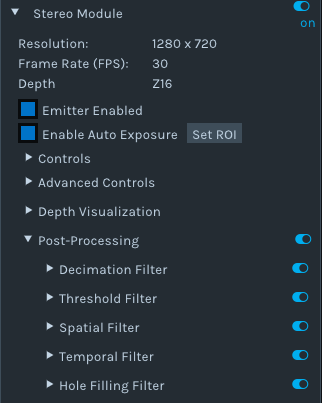
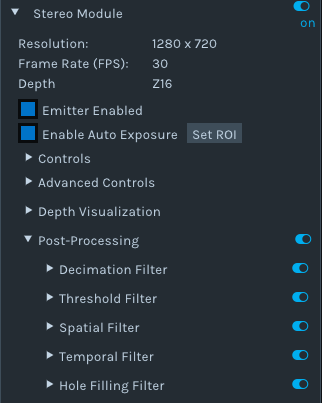
So in the viewer the postprocessing can applie filters, also in here we need it, and for measuring, most important is the hole filling filter for me


The code of the options in the Viewer can be used in the code like this:
the structure is define a filter, and then process the frame

    dec = rs.decimation_filter(1) # define a filter
    to_dasparity = rs.disparity_transform(True)
    dasparity_to = rs.disparity_transform(False)
    spat = rs.spatial_filter()
spat.set_option(RS2_OPTION_HOLES_FILL, 5)
    hole = rs.hole_filling_filter(2)
    temp = rs.temporal_filter()
            depth = dec.process(depth_frame) #process the frame
            depth_dis = to_dasparity.process(depth)
            depth_spat = spat.process(depth_dis)
            depth_temp = temp.process(depth_spat)
            depth_hole = hole.process(depth_temp)
            depth_final = dasparity_to.process(depth_hole)

I translated the process in the rs.measure example
The hole processing is actually done under the spatial filter
Visualization
So after the basic data is ready the preparation for visualizing will first colorize the depth frame
depth_color_frame = rs.colorizer().colorize(depth_frame)
The color scheme can be also decided in the option of colorizer
depth_color_image = np.asanyarray(depth_color_frame.get_data())
color_image = np.asanyarray(color_frame.get_data())
Then is turn the frames into numpy arrays

OpenCV visualization
color_cvt = cv2.cvtColor(color_image,cv2.COLOR_RGB2BGR)    #convert color to correct
cv2.namedWindow(“Color Stream", cv2.WINDOW_AUTOSIZE)
cv2.imshow(“Color Stream",color_image)
cv2.imshow(“Depth Stream", depth_color_image)
            key = cv2.waitKey(1)
            # if pressed escape exit program
            if key == 27:
            cv2.destroyAllWindows()
            Break
As I mentioned before, opencv has BGR as defualt, so RGB must be first transformed to BGR to get the right color
With matplotlib it is also easy,
from matplotlib import pyplot as plt
 plt.imshow(img_over)
plt.show()
And it is done
Until here is the basic get frames and visualize, the basis of all future use and application.

RealSense 學習筆記/教學/分享(五):用新的相機程式碼解釋Multiproccesing

之前完成的相機程式跟Arcmap plugin都做好之後,就正式投入使用啦

不過中間也是經過幾般波折,出去測試半天之後,還在調整

然後說想要再測試,結果直接被派了一個三天兩夜…

完全傻眼的結果,於是就在車上邊調整程式碼

然後呢,當我弄到夠自動化可以司機自己去時,我發現我沒有電腦了,因為被帶走了

於是公司又給了我一台,可是呢,果然,又是一個2014年的基本款文書機

4GB ram,HDD,唯一可以的大概就…i5 這樣

繼續閱讀 “RealSense 學習筆記/教學/分享(五):用新的相機程式碼解釋Multiproccesing"

RealSense 學習筆記/教學/分享(三):幀的控制

前面那篇在機器的控制端準備好了之後,接收到的資料要怎麼處理呢?

就讓我在這篇裡面介紹

主要本篇在於視覺化 用opencv為主

適用的範例是這個:
https://github.com/soarwing52/RealsensePython/blob/master/phase%201/read_bag.py

在上一篇的設定好了之後,就用可以看第一篇裡面的表格

poll_for_frames()
回傳配對好的畫面,沒有配對就回傳Null
只要加上
if not depth_frame or not color_frame:
continue
即可在Null時避免接下來的錯誤
wait_for_frames()
他會獲取一幀之後暫停串流,然後直到獲取下一幀
不過我使用結果之後,在深度跟RGB影像配對上出了問題
他會取上一幀跟下一幀 不過我每幀都隔10秒不能用
try_wait_for_frames
這個應該就是在wait_for_frames上面再多加一個等待的秒數
沒有實測過

基本上如果在讀檔的時候就會讀到重覆的幀
第一次第二次黃色 然後藍色 綠色 紅色這樣取
在當影片的時候完全沒問題,不過我當作相機的時候就不能這樣了
而且當我測量的時候,畫面A但是深度B對不起來根本量到的東西不一樣阿!
我是把深度跟畫面疊在一起,還有取到雙方的秒數來配對後發現的

timestamp
Frame number
Fream number
timestamp
402204.595
Depth243
Color 274
402204.221
403104.714
Depth 270
Color 301
403104.941
404171.521
Depth 302
Color306
403271.741
406038.434
Depth359
Color333
404172.461
407305.267
Depth 397
Color 389
406040.621
407338.605
Depth398
Color 427
407308.301
408038.697
Depth419
Color 449
408042.221
409238.855
Depth 455
Color 485
409243.181
409938.947
Depth476
Color 506
409943.741
410705.715
Depth 499
Color 529
410711.021

不過,先回到基本的視覺化處理
雖然彩色深度都用1280*720,還是會有些微不同,兩個鏡頭的畫面大小不太一樣,更何況彩色可以到1920*1080
所以要先把圖對在一起
在github討論串有人問為甚麼不自動對齊,主要原因由專案負責人Dordinic回答了
在做2D畫面的時候是把深度疊進彩色
但是在做3D模型 point cloud的時候就要把彩色疊到深度上面
所以交給使用者來決定(尤其這是一個開發者導向的產品)
下圖為把兩個疊合在一起的畫面 深度1280*720 RGB1980*1080

align_to = rs.stream.color # or also depth
align = rs.align(align_to)
然後在while loop裡面
frames = pipeline.wait_for_frames()
aligned_frames = align.process(frames)
於是這樣幾行就可以疊出正確的圖作為接下來運算的標準
記得要在前面enable stream
獲取資料後,把他們轉成物件object
depth_frame = frame.get_depth_frame() 
color_frame = frame.get_color_frame()
有一個 rs.composite_frames()
我還不知道怎麼用
還有看到用 get_data().first_depth_sensor()
不同的方法,不過暫時我不需要所以就沒有深入也沒辦法深入了

濾鏡Fileters
接下來就是之前在第一篇裡面提到的 post-processing
官方說明文件在這裡:

https://github.com/IntelRealSense/librealsense/blob/master/doc/post-processing-filters.md

對我最重要的是hole filling 把整個畫面都有數值
不過其實做到現在反而我都還沒有放,等到實地測量的資料更多再視情況
因為官方說這是一個很粗暴的填滿,反而會失準
總之,選項就跟viewer裡面看的到的一樣

dec = rs.decimation_filter(1)
to_dasparity = rs.disparity_transform(True)
dasparity_to = rs.disparity_transform(False)
spat = rs.spatial_filter()
spat.set_option(RS2_OPTION_HOLES_FILL, 5)
hole = rs.hole_filling_filter(2)
temp = rs.temporal_filter()

先在loop前定義好濾鏡
然後在裡面套用

depth = dec.process(depth_frame)
depth_dis = to_dasparity.process(depth)
depth_spat = spat.process(depth_dis)
depth_temp = temp.process(depth_spat)
depth_hole = hole.process(depth_temp)
depth_final = dasparity_to.process(depth_hole)

我的來源是這裡:
這是拿到相機後整整五個工作天我才逐漸掌握了怎麼轉譯從C++到python
開始把這個範例作為接下來開發的基底

接下來我的程式碼裡面就是一些幀的資料
var = rs.frame.get_frame_number(color_frame)
print ‘frame number: ‘+ str(var)
time_stamp = rs.frame.get_timestamp(color_frame)
time = datetime.now()
print ‘timestamp: ‘ + str(time_stamp)
domain = rs.frame.get_frame_timestamp_domain(color_frame)
print domain
meta = rs.frame.get_data(color_frame)
print ‘metadata: ‘ + str(meta)

視覺化
在python裡面的套件,適合用的就是opencv,在官方也是用這個

當然還有rosbag跟其他matlab等等,我主要用opencv後來用matplotlib作為尺規做圖
所以 前面提過 pip install opencv-python
然後import cv2
color_cvt = cv2.cvtColor(color_image,cv2.COLOR_RGB2BGR)    #convert color to correct
cv2.namedWindow(“Color Stream", cv2.WINDOW_AUTOSIZE)
cv2.imshow(“Color Stream",color_image)
cv2.imshow(“Depth Stream", depth_color_image)
    key = cv2.waitKey(1)
    # if pressed escape exit program
    if key == 27:
        cv2.destroyAllWindows()
        Break

我先前提過 BGR是opencv預設的打開模式,所以我錄製rgb要轉成bgr
然後設定視窗
waitKey是每個畫面幾毫秒
然後按esc的時候關閉
matplotlib更簡單

from matplotlib import pyplot as plt
plt.imshow(img)
plt.show()

這樣就可以顯示出圖片了
到這裡之後就可以看到畫面了
要做成影片就是範例裡面的
try:
  while True:
然後用wait for frames就可以拿到資料
然後再用opencv 每毫秒更新就是影片了
不過其實stream在跑的時候 不論有沒有wait for frame他都一直在傳資料了
這就是我這個專案的基礎了,接下來就可以開始計算3D距離了

RealSense 學習筆記/教學/分享(二):裝置控制

有些人問我 明明工作看起來也不錯 薪水 環境都不錯 為什麼我還在找?

先看看以下影片

這是去年的發表,當辦公室仍在用2000或是更久以前的方法 花許多時間/人力/眼力的同時

這樣的算法已經準備隨時取代掉這些工作了

你說我會不會怕? 當然會,所以要找能夠更未來性的工作 而不是在這樣養老的小鎮 已暫時的安穩而滿足,必須更向前啊!

繼續閱讀 “RealSense 學習筆記/教學/分享(二):裝置控制"

RealSense learning/turtorial/sharing blog – Chapter Two: More Device Adjustments

So, after the hello world, more controls over the device.

So the pipeline is basically start/stop, and wait_for_frames

And the function of pipeline_profile I haven’t know yet

in this part I will put in the controls before wait_for_frames,

including record file, read file, and others
First, complete the configuration:

Rs.config


enable_stream
Define the stream type and also width/height…
enable_all_streams
Turn on all streams at once
enable_device
Input “serial”
enable_device_from_file
(“filename”,True/False) for repeat_playback or not, either once to the end, or keep looping
enable_record_to_file
(“filename.bag”)
disable_stream
(“stream”,”index”)
disable_all_streams
resolve
can_resolve

the enable stream is mentions before,

config.enable_stream(rs.stream.depth, 640, 360, rs.format.z16, 30)

config.enable_stream(rs.stream.color, 640, 480, rs.format.bgr8, 30)

The options can be found in the Intel Realsense Viewer, color,depth,infrared, resolution, mode, fps.

and the  rest is more related when multiple devices were used
config.enable_record_to_file(file_name)
config.enable_from_device(filename)

these are when recording or reading
enable from device have the option True/False
allow replay or just loop once through all the frame and end
If False, it will be the Runtimeerror of “no frames arrived in 5000″
thats why I had the except in the try loop
——————————————————————————————————————–
device = profile.get_device()

depth_sensor = device.first_depth_sensor()

depth_sensor.set_option(rs.option.visual_preset, 4)

dev_range = depth_sensor.get_option_range(rs.option.visual_preset)

preset_name = depth_sensor.get_option_value_description(rs.option.visual_preset, 4)

https://github.com/IntelRealSense/librealsense/wiki/D400-Series-Visual-Presets#related-discussion

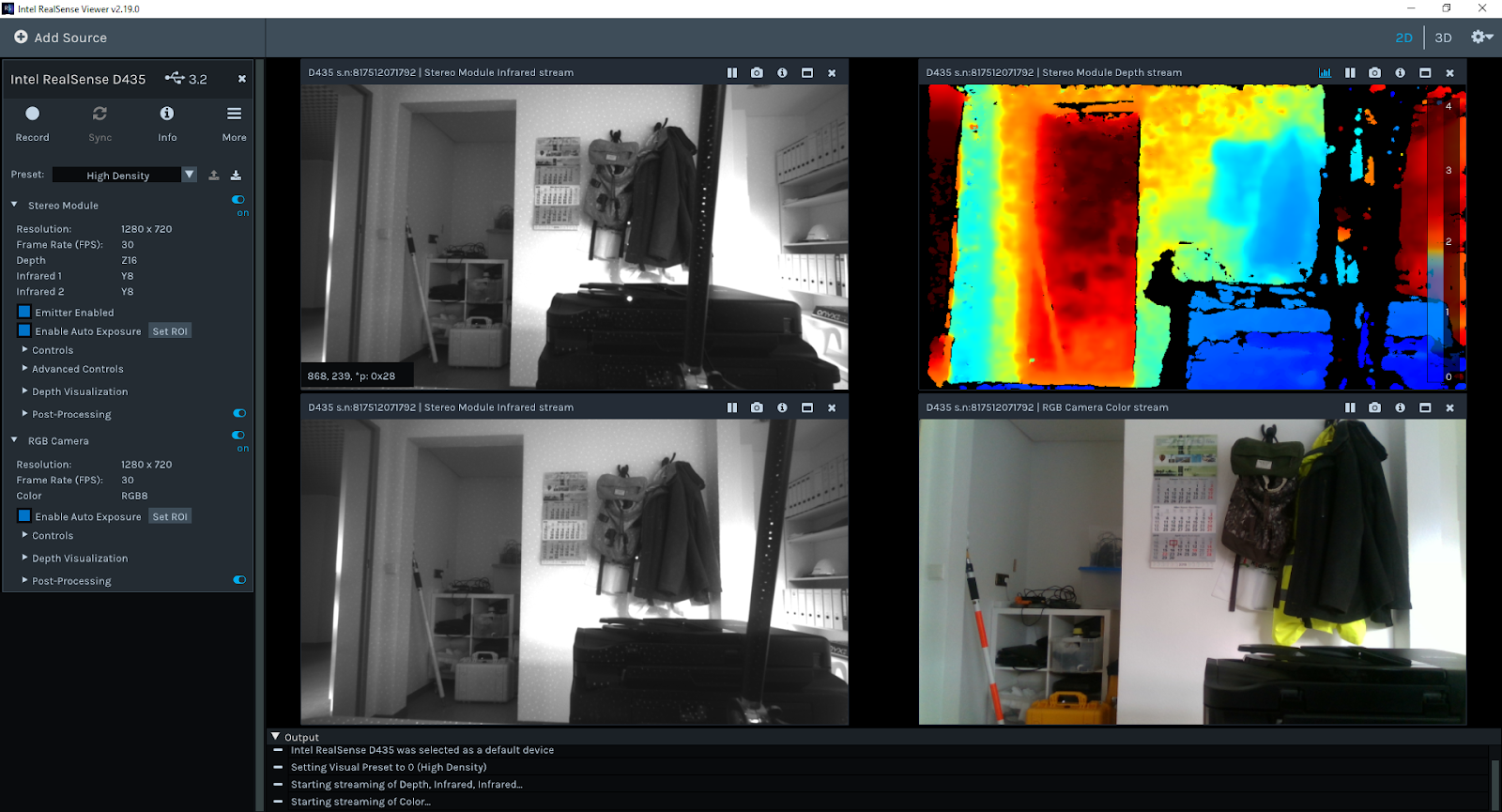
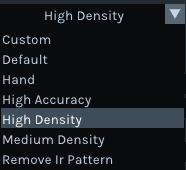
This part is setting the preset as in the Realsense Viewer, and in my need is the preset 4, high density.

The dorodnic of intel he wrote on loop to loop through the presets.


which he mentioned the preset numbers are changing all the time, I suppose its among other devices, at least in this same machine it stays

recorder = device.as_recorder()
pause = rs.recorder.pause(recorder)
playback = device.as_playback()
playback.set_real_time(False)
playback.pause()
playback.resume()

Recorder will start recording when in the configuration set,with function or .pause() and .resume()

And the next is playback

This is playing the recorded bag file


pause
Pause and resume, while resume it always turn really slow and lag, until it catch up with the frames
resume
file_name
I haven’t use these functions
get_position
get_duration
is_real_time
Set to the real time behavior as recorded time
set_real_time
Usually I set to set_real_time(False) so I can go through each frame to measure, or else the pipeline will keep the frames looping as real time behavior when its (True)
config.enable_record_to_file(file_name)
So I suppose it can open one bag and record this playback to a new file, while
rs.config.enable_device_from_file(config, ‘123.bag’)
Does Not enable the same time
config.enable_record_to_file(file_name)
current_status


Intrinsic/Extrinsic

depth_stream = profile.get_stream(rs.stream.depth)
inst = rs.video_stream_profile.intrinsics
#get intrinsics of the frames
depth_intrin = depth_frame.profile.as_video_stream_profile().intrinsics
color_intrin = color_frame.profile.as_video_stream_profile().intrinsics
depth_to_color_extrin = depth_frame.profile.get_extrinsics_to(color_frame.profile)

These are getting some data of the camera and streams, i use intrinsic to get the calibration while projecting pixels to 3D coordinations

Otherwise I have no other use for them yet, as I go through the files the usage would be more in 3D models also, while creating by scanning, the accuracy is a lot more important in smaller scales

——————————————————————————————————————
So this part is without example codes because it’s a more general usage for all files
which will be used in most further codes I will be demonstrating.
and I just got the use of turn off auto exposure today, will put it in in the future
the usage of turning it off is for not drop frames.
this is also one of my major issues 
I need to make it act as a camera, and every frame I took should be reachable
but the wait_for_frame is currently not giving me all the frames, and also not recording or recorded too much
if any pros saw this, please write in the comments or send me an email about this topic.
thank you!

RealSense 學習筆記/教學/分享 (一):Hello World

當然 所有程式的開始都是 Hello World

這個也不例外

第一個功能,就是開啟相機,然後偵測畫面中央的深度距離相機多遠

我的成果如下:

https://github.com/soarwing52/RealsensePython/blob/master/phase%201/Hello%20World.py
—————————————————————-

繼續閱讀 “RealSense 學習筆記/教學/分享 (一):Hello World"

RealSense 學習筆記/教學/分享-序篇:開始與安裝

因為工作的關係,老闆決定買了Intel D435的深度相機

然後就叫我做出他們未來可以測量照片裡面物體的大小

大概就是萊卡他們的產品那樣

我們公司做的是道路資料蒐集road survey

現在能看到的主要都是F200 跟一些比較舊的教學文,新一代D400 系列的比較少

所以就想來教學相長一下,希望看到這篇也能夠跟我一起交流
——————————————————————————————————
求助區
目前我卡關的有
rs.syncer
playback.seek
poll_for_frames
如果有看到的可以指導一下就拜託了!
——————————————————————————————————-

D400系列

我比較了D415/D435 基本上大同小異的深度相機,不過435有比較廣的視角

所以在我們的需求上選用的他

Rolling shutte/Global shutter是另外主要的差異

不過在我們的使用上是沒有影響的
——————————————————————————————————-
首先就是基礎安裝啦

開發者套件(SDK)

這款相機主要定位是給開發者/教學/研究用途,算是把未完成的產品拿出來賣然後由使用者開發?
不過畢竟是intel 這產品主要也是賣晶片 以供未來普及在筆電/汽車/遊戲機等

安裝完之後 打開viewer會說需要升級韌體

一樣按照連結,打開之後是個簡單的command line

先在2確定可以升級的裝置之後會到1,輸入完整連結即可

安裝完成之後裡面含有:
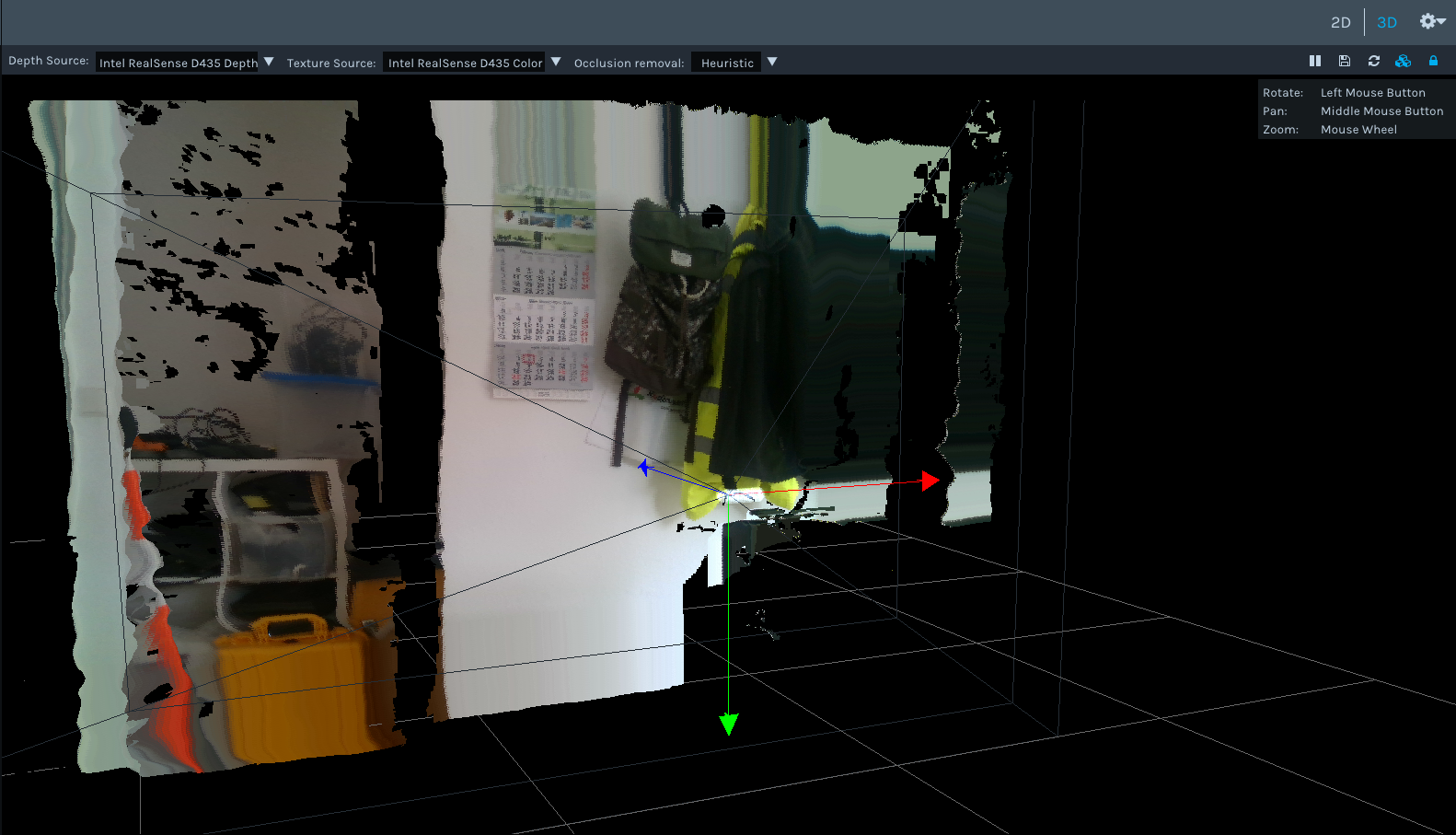
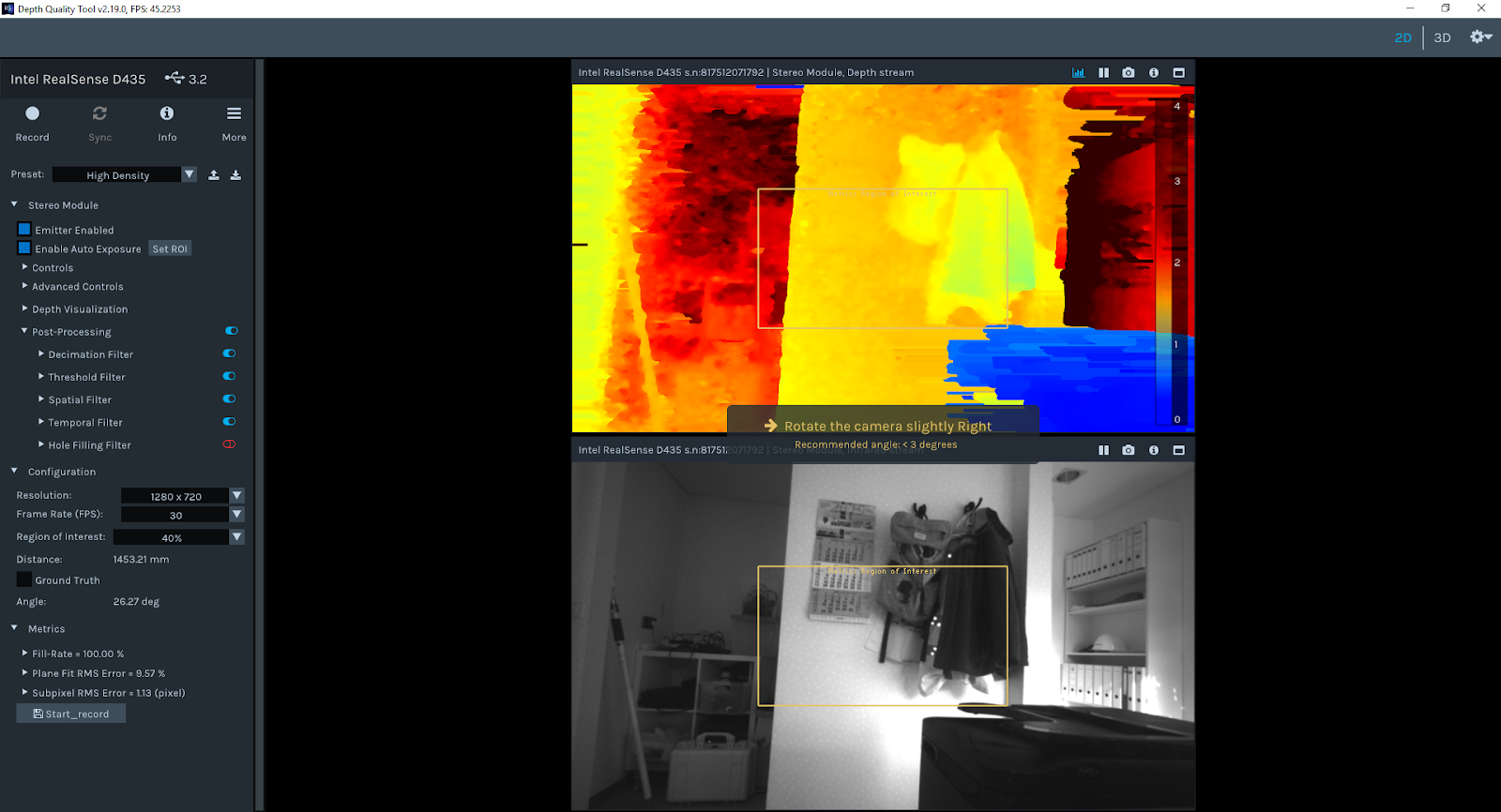
Intel® RealSense™ viewer:可以直接顯示RGB/深度 2D/3D影像 並且可以錄製
Depth quality tool:檢視深度影像
Debug tools:裝置的校正回報時候會用到的套件
Code samples:最一開始學習時候,就是這個Visual Studio示範開始的
Wrappers:支援C++以外的 C、Python、Node.js API、ROS、LabVIEW語言套件

打開之後開啟所有的stream 影像 可以看到紅外線IR 可見光RGB 跟深度 depth

RGB相機的設定值有:

有灰階:

RGB

 BGR

深度相機

主要就是設定 preset還有後製post-processing

hole filling是我在這次主要會用到的功能

前後比較

除了這個 還有3D模式

一個角度當然不夠,是在做pointcloud 3D模型的時候用的

然後depth viewer我用起來 就像是只用深度的部分

其他功能看起來都一樣 就是沒有RGB

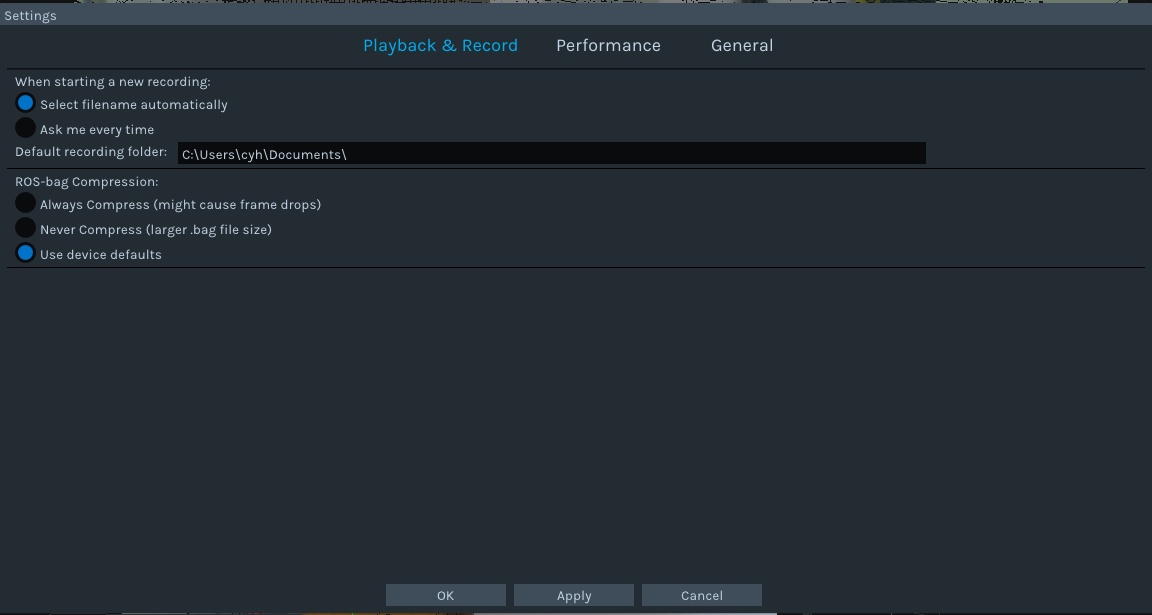
最後 錄製的成果可以選擇儲存在哪裡

————————————————————————————————————————
比較重要的幾個使用須知:
一定!一定一定!!!!!! 要使用USB3.0的接孔,才有足夠的頻寬可以把相機的影像傳到電腦裡面

相機本身就是一個感測器 除了鏡頭接收之外,還有小部分的硬體同步與修正,其他都回傳到電腦裡面做處理

因此,在線材的選用也必須要找usb typeC 然後也是3.1的USB線才可以用,也有一些因為太長而導致了資料傳輸失敗
最常出現的就是frame drop 當頻寬不足的時候 30fps錄下來的可能會有許多幀數遺失

還有一個我看到的問題,就是快速抽差

在使用的時候如果把線慢慢滑進去,可能就會偵測為USB2.0 所以務必一鼓作氣 直搗黃蓉

———————————————————————————————————————–
序就寫了開始的一些步驟 還沒開始到程式碼的部分

基本上安裝沒什麼問題,唯一在公司就是因為管理員權限鎖住,所以一路請主管過來輸入

直到韌體升級已經花了半天,從早上十點到下午兩點了

後來我問能不能調整權限,於是獲得了"新的"工作用電腦

ram 4G 2014年的lenovo電腦 沒有SSD

說這台完全沒有任何權限問題 你就拿去用吧!